
OF DESIRE
By Mark Bishop
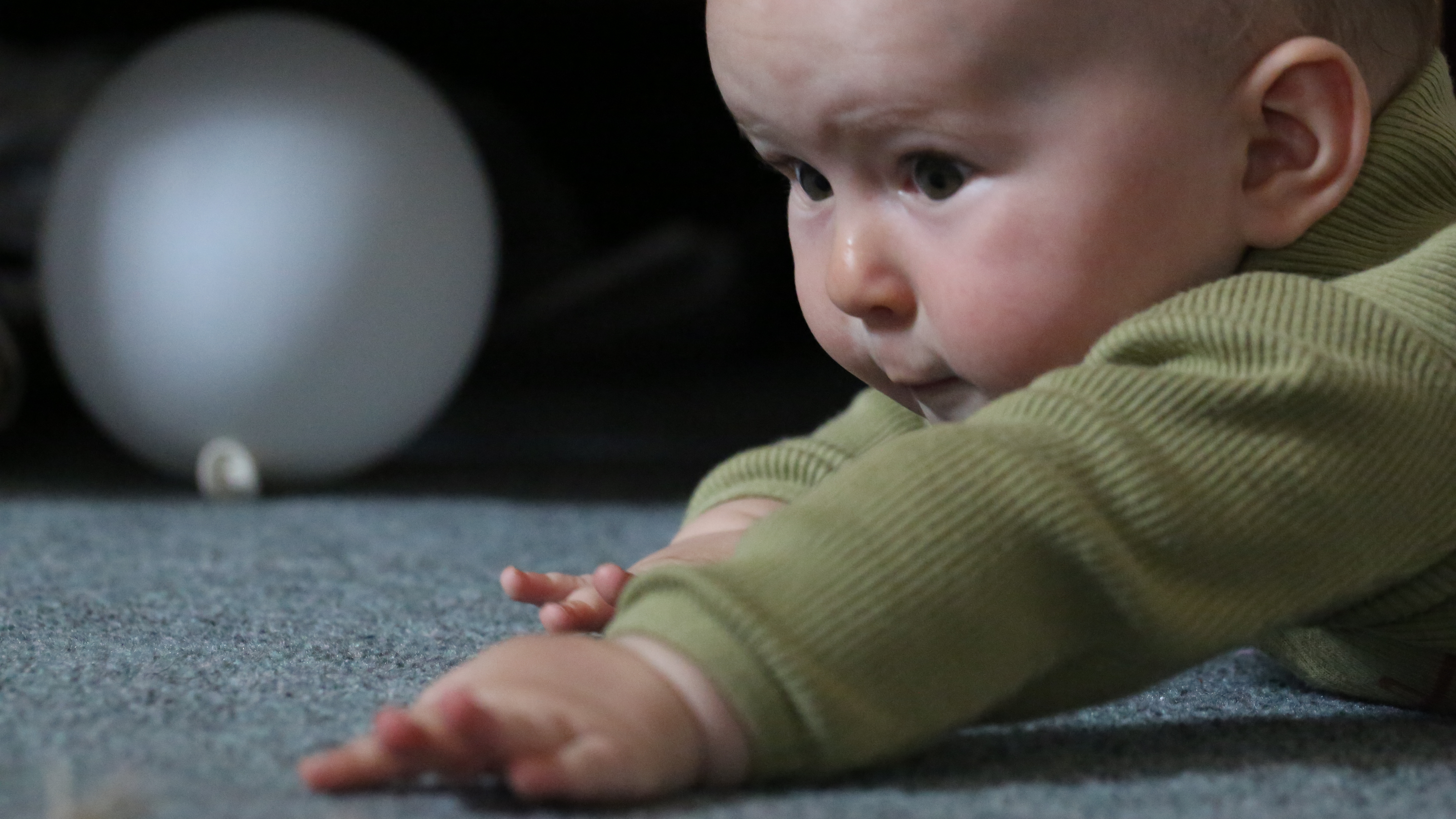
A baby attempts to crawl across a room to her mother’s arms. An elderly woman awaits the warmth of the afternoon sun reflecting on a meaningful moment from her past. A young lady goes about her busy daily routine with various screens and billboards constantly drawing her attention. ‘Of Desire’ is a comparative piece that contrasts the relationship of desire between three people at very different stages in their life.
First we are introduced to a baby and mother. The scene is clearly established in a wide shot with deep focus capturing the room and space between them as the baby sets off toward her goal. From her POV the motion is slightly slowed and zoomed in on details of her mums face and the carpet in front of her. As we observe her concentrated gaze and careful movements the sound is crisp and slightly heightened; her knees dragging along the carpet, her little palms making contact with the floor.
Then we meet an elderly woman who very gingerly sits down in a chair. With a shallow depth of field the setting is a little less clear. Her POV too is a little blurry but we can make out a view of trees through a window that are silhouetted by a setting sun. The sounds of birds and then a plane overhead is somewhat muted. The sunlight making its way up her legs brings back a memory of when she was a teenager. She’s in a park this time as she watches the sun set. Shallow focus hones in on particular details. The sound of the birds is very clear and then the pants of a boisterous Staffy that bounds toward her. The memory is of her reuniting with a friend, which for certain moments the atmospheric sounds fade and the image slows like when they finally embrace in the sunlight.
Lastly we begin on a POV of the young woman as we hear an alarm sound. She picks up her mobile phone, which has an inspirational image and quote on the home screen. The first we see of her face is a close up of this image reflected in her eye. The surrounding space is never seen and then we cut to a picturesque image of a cityscape from a park where the early morning calls of birds can be heard clearly. Suddenly she cuts through the foreground with the tinny sound of music through headphones following her. As she goes about her morning routine and makes her way to work we aren’t given a clear sense of where she is with no real establishing shots and deceptive perspectives. She doesn’t seem connected to her surroundings either with her POV constantly containing a screen or an image on a billboard. Her eyes are never seen unless reflecting these images. Diegetic music is almost constantly heard mostly drowning out the indiscernible sounds of her surrounding environment.
The differing sound design and aesthetic techniques are utilized to both give a sense of each characters world and to reveal the contrast between them. ‘Of Desire’ brings into focus the positioning and nature of our object of desire in a world saturated with constructed imagery. The baby and elderly person are less connected to this world and are therefore more present in the physical world and their own imagining. The baby is driven by a simple instinct toward a tangible goal right in front of her. She must figure out how to bridge this gap and is completely present in the process. The old lady’s object of desire is both physical and in the form of a memory. She too has reduced mobility but has the patience and presence of mind to wait for the sun to approach her. This memory is identified as meaningful to her and an experience of it is accessible. The young woman’s object of desire seems to exist in a world of constructed imagery. It is always in front of her yet never accessible. She is motivated like the others but neither waiting nor moving seem to bring her any closer to what she craves. She is the most able of body and mind and yet seems to move around in circles and appears disconnected from the potential gratifications reality has to offer.
‘Of Desire’ considers the system that relies on us being in a constant state of desire driving us to work more and buy more. It spawns a world saturated by manipulative imagery that manufactures both notions of lack and idealized images of wholeness in order to keep us trapped in this loop. Is it only when we aren’t valued consumers that we are free to see what’s right in front of us or realize what is of true worth?
 SCREENAGE